
12 August 2026
Meet the volunteers leading the Bumblebee Champions of the Weald
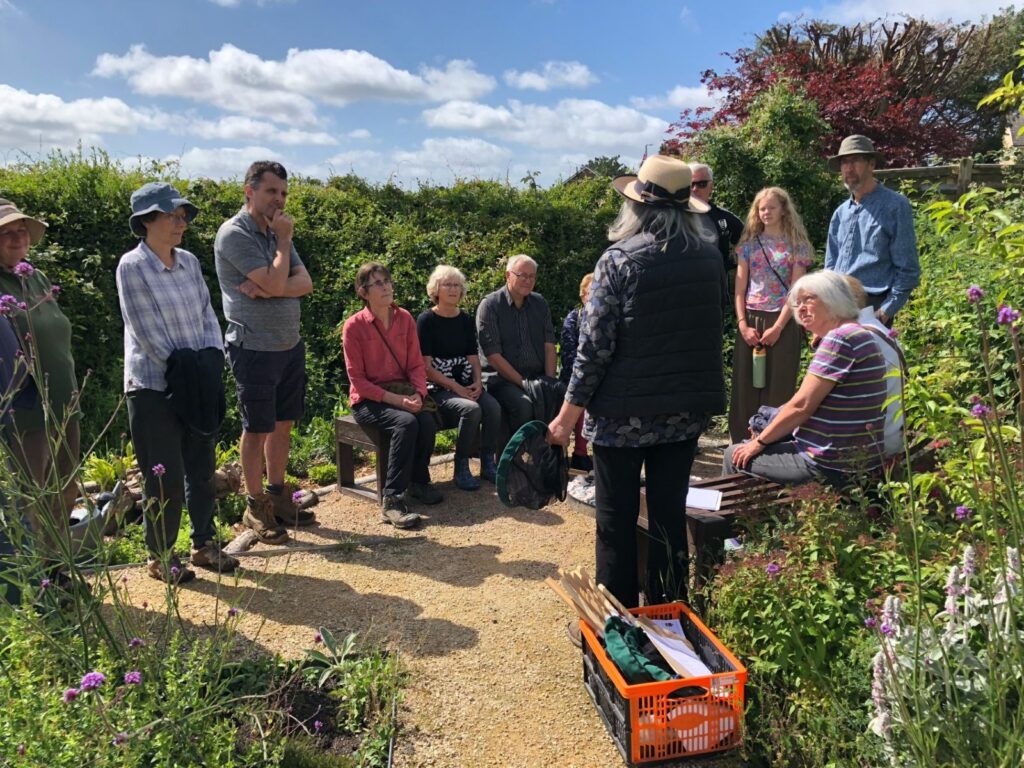
Morgan and Peter leading a group of volunteers on a BeeWalk
Since launching in January, the volunteer-led Bumblebee Champions of the Weald project has smashed a major milestone well ahead of schedule. The volunteer team is on target to triple the original target of delivering 35 events, and is now on track to lead more than 100 activities across the region by the end of the year. This is the Bumblebee Conservation Trust’s first project run entirely by volunteers, and it is demonstrating the remarkable difference passionate local people can make for bumblebee conservation.
Working across the High Weald of East Sussex and Kent, the project is celebrating the area’s rich natural heritage while improving understanding of its important bumblebee populations. This unique landscape of ancient woodland, rolling hills, meadows and farmland has boasted recorded sightings of four of the UK’s seven rarest bumblebee species, making it a nationally significant area for conservation and monitoring. By increasing recording efforts in a historically under-surveyed region, the project is helping to build a clearer picture of local bumblebee populations while creating a lasting legacy of trained BeeWalk volunteers to continue this work for years to come.
At the heart of this volunteer-powered success are Morgan and Peter, two long-standing Bumblebee Conservation Trust volunteers whose enthusiasm, knowledge and dedication have helped inspire communities across the Weald. Here, Morgan tells us a little more about how they have created such a thriving conservation project…
The project’s first event was in February at the Sussex Biological Recorders’ Seminar, a full day conference where we spoke to 250 people about bumblebees. Since then, the Champions have led events at castles, parks, and private and community gardens. Many of these sites are already doing incredible work supporting bumblebees and other local wildlife, and the Champions have advised them on further steps to improve their land, including how to create space for bumblebee nests and provide flowering plants throughout the seasons.
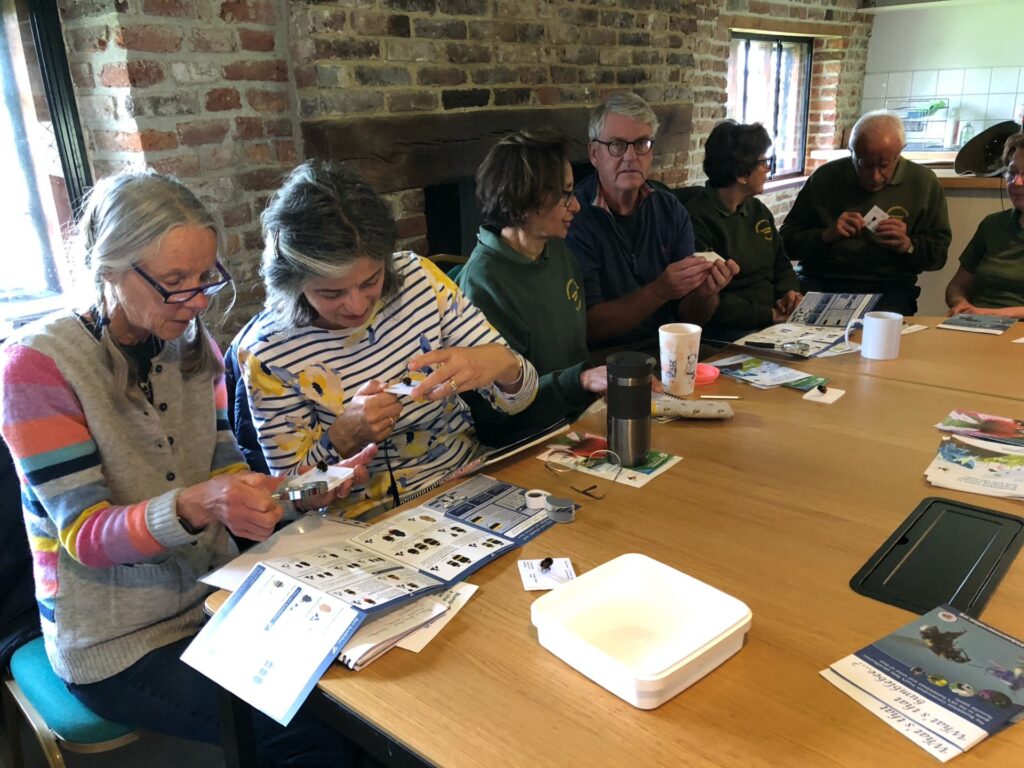
Group of volunteers learning how to identify different bumblebee species
The Recorders’ Seminar was a particularly important day for the project as it brought us into contact with a group of people who were already enthusiastic and who understood the importance of recording data. From that single event we met individuals with meadows, those running community gardens and woods, and members of wildlife trusts who wanted to improve recording skills within their volunteers and staff. We offered free training to over 100 people as a result of the relationships formed on that one day.
One of the main aims of the project is to recruit volunteer BeeWalkers. So far, the Champions have established six new BeeWalk routes, and have recruited and trained new volunteers to record these transects. By completing multiple BeeWalk routes once a month during the bumblebee season, the Trust can build a better understanding of how bumblebee populations are doing over time and how conservation work can best help them. The more BeeWalks the Champions can establish in the High Weald, the greater our understanding will be.
Before the project started, we hoped to record populations of some of the UK’s rarest bumblebees. Sadly, none of these rare bumblebees have been recorded so far. This is very concerning as rare bumblebees have been recorded on the High Weald in the past. We will continue to look for rare bumblebees throughout the remaining months of the project and can only hypothesise that the extremely high temperatures and drought conditions of this year may have played a part. Temperatures were regularly in the high 20s and even as high as 32 degrees on occasion and the Champions were forced to cancel several BeeWalks and surveys because the temperature was too high for the bumblebees to be flying. In addition, the South East has had approximately three months with no significant rainfall: drought means less nectar for bumblebees.
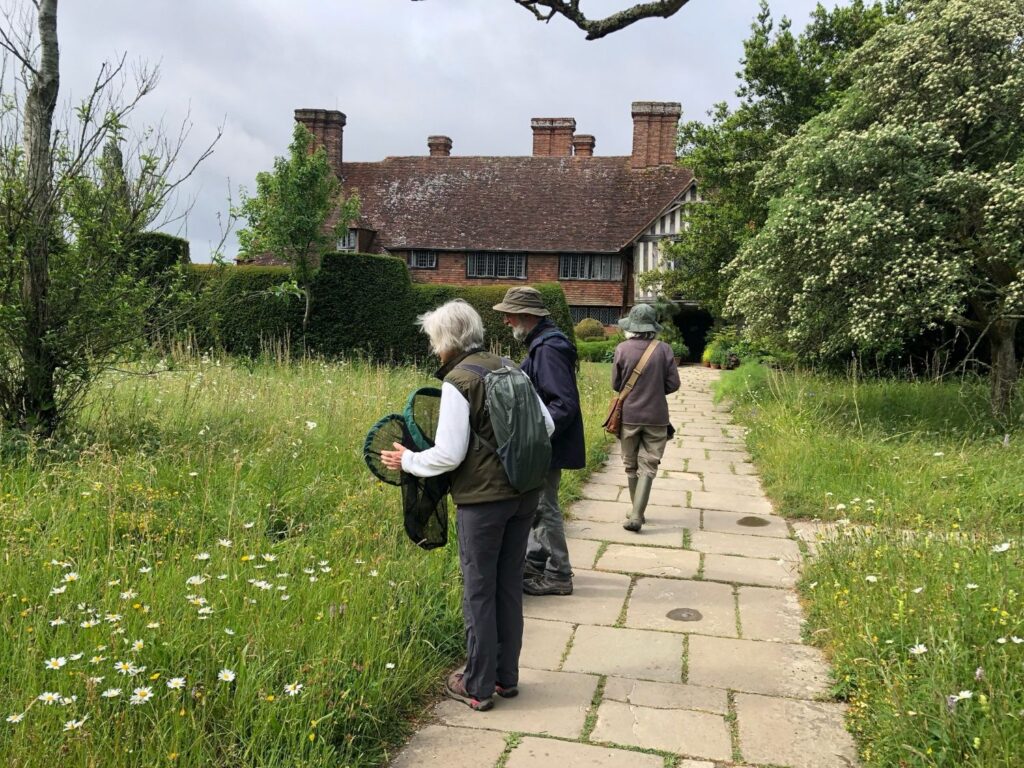
Volunteers looking for bumblebees on a BeeWalk
We were pleased that common bumblebees have been abundant, with good counts of the common species such as Buff-tailed, Red-tailed, Early, Garden and Common Carder bumblebees.
Every BeeWalk carries the possibility of finding something rare and remarkable – the Champions’ excitement of what bumblebees they might spot never fades. We’re keeping our fingers crossed that we may find our first Ruderal or Moss carder bumblebees!
Meet Morgan and Peter!
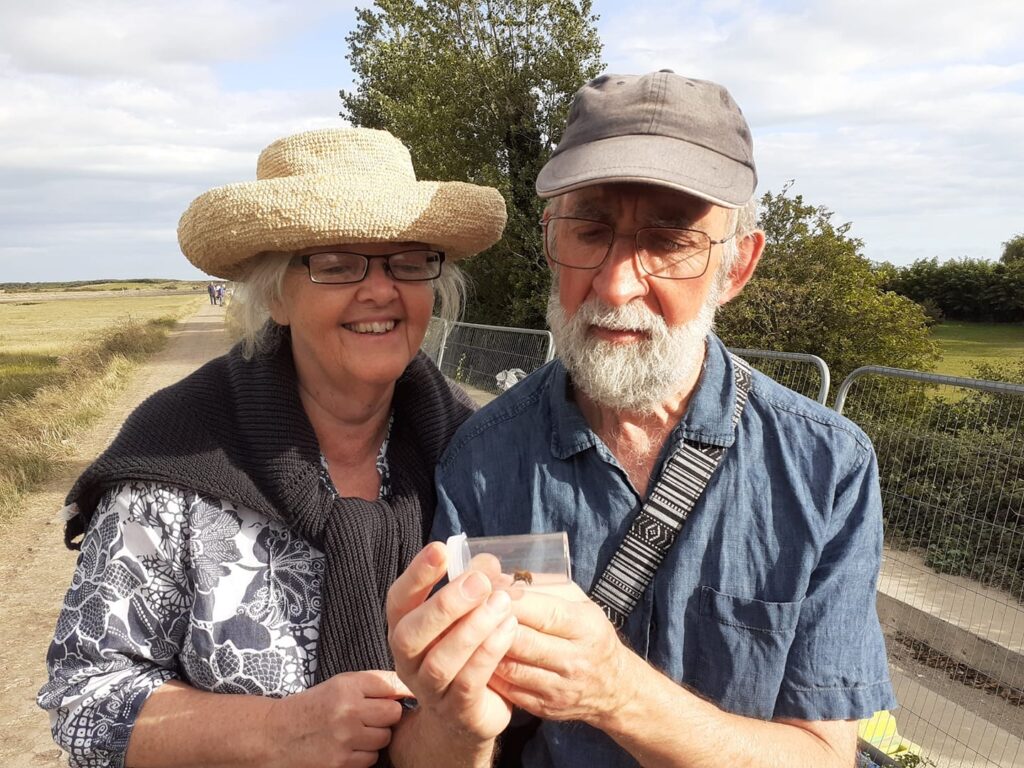
Morgan and Peter identifying a bumblebee.