21 July 2026
Heatwaves are in the news again – did you see this article on the BBC website? Across the country, butterflies are basking, lizards are lounging, enjoying the warmth they’ve been waiting for. But bumblebees are cool-weather creatures. Data from BeeWalk, the Trust’s long-running citizen science program, tells us that some of our bumblebees might be in for a tough time.
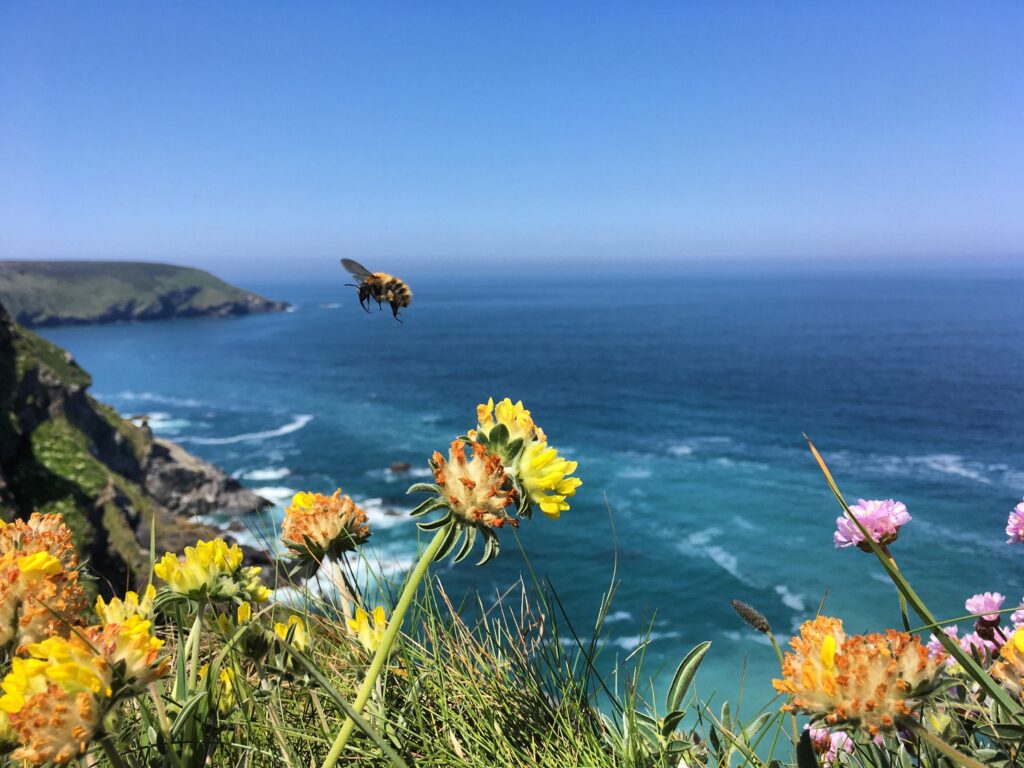
Common carder bumblebee. Credit: Henry Upton
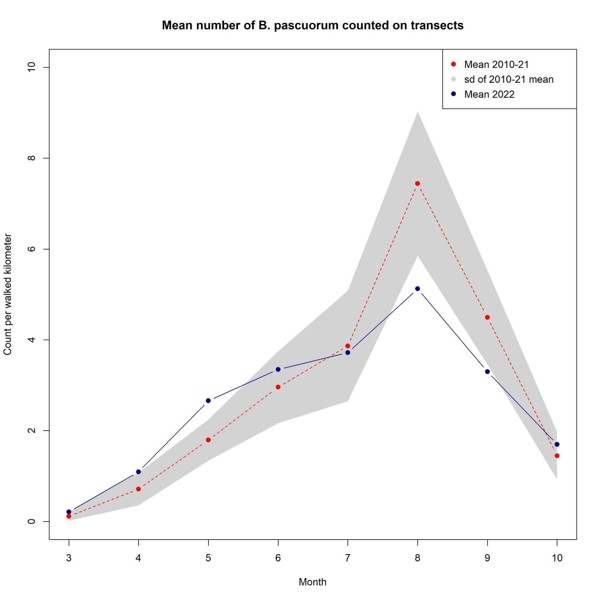
Summer 2022 saw three official summer heatwaves in June, July, and August. These were short but very hot, reaching 40.3°C in July. The effect was immediately visible in the BeeWalk data. Populations wilted in the heat, with common species such as the Red-tailed, Buff-tailed, and Common carder bumblebee peaking at much lower numbers than normal (down 20%, 25%, and 35% respectively) and dropping off quickly into the autumn as colonies struggled. Queens which hatched in summer 2022 then hibernated through the winter to emerge in spring 2023, and the BeeWalk data showed that overall queen numbers were below average in each of March, April and May 2023, showing the lasting impact of the 2022 temperatures.
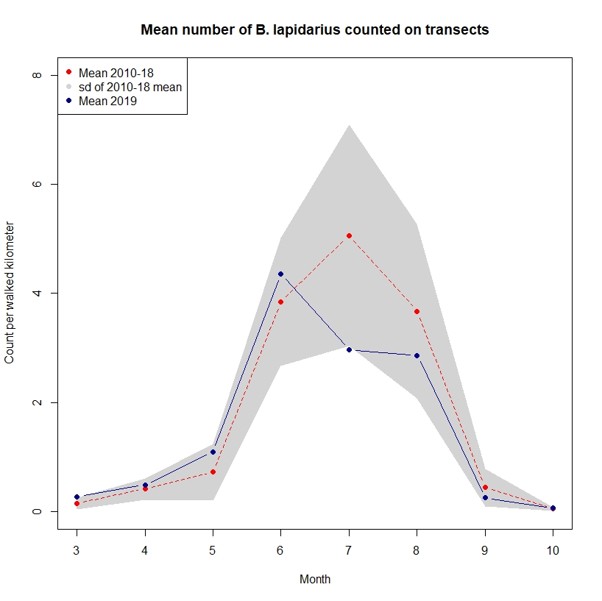
2019 saw the previous hottest day ever recorded in Britain, 38.7°C during a June-July heatwave. This heatwave was shorter and earlier, as well as slightly less hot, and the effect on bumblebees was more mixed. Several species which would usually reach their colony peak in July instead saw numbers plummet after June, including the Red-tail, Buff-tail, White-tail, and Garden bumblebees. The Common carder, a later-peaking species, saw colonies plateau from June to July instead of increasing, meaning that the August peak was around 30% below the average in 2019.
But that doesn’t seem to tell the whole story. 2018 was the UK’s hottest summer until 2025 surpassed it, but while it had many hot days it had very few days of extreme heat (32°C+). Similarly, 2021, 2023, 2025, and even 2024 had heatwaves, but generally of limited duration and comparatively mild top temperatures. These heatwaves seem to have disturbed the bumblebees far less, without obvious drop-offs in activity or evident impacts on queen numbers the following spring. In fact, some of those years were really good for bumblebees, particularly some of our more southern species. So what’s going on? And what is it likely to mean for bumblebees this summer?
Well, to answer that, we need to look at the biology of why bumblebees struggle in the heat. Bumblebees lumber through the sky from flower to flower powered by the flapping of huge wing muscles, and that generates a lot of heat internally – just like human muscles do when you run. Bumblebees are very hairy and so find it hard to cool down – it’s like permanently wearing a coat. That’s great when it’s cold outside, but makes life difficult when it gets hotter because the bees can’t cool themselves down enough and so their internal body temperatures climb higher and higher. Tests on a North American bumblebee species (Bombus vosnesenskii, a native of California) found that it began overheating after three minutes of flight at 42°C. At 44°C, they began to overheat without flying.
That’s exacerbated if the sun is shining, as that makes everything feel hotter still. And UK bumblebees aren’t built for California weather. Essentially, when the air temperature reaches 28-32°C, UK bumblebees start to struggle to fly without overheating. If they can’t fly, they can’t forage. If they can’t forage to bring back food, then the larvae in the nest can’t eat. If they can’t eat as much, as quickly, then they don’t develop as quickly or as well, leading to smaller colonies and thus fewer new queens and, ultimately, shrinking populations.
Heat-enforced inactivity is only the most direct physiological impact of heatwaves on bumblebees, however. Warm, sunny weather is great for bumblebees – there’s a reason why they’re the iconic sound of summer. But you can have too much of a good thing. Droughts mean that plants don’t produce as much nectar, and sometimes less pollen as well. That means that even if bumblebees can fly and forage all day, they won’t find as much food as quickly. They’re essentially shopping in an empty supermarket, wasting time prospecting dried-up flowers, looking for food that just isn’t there.
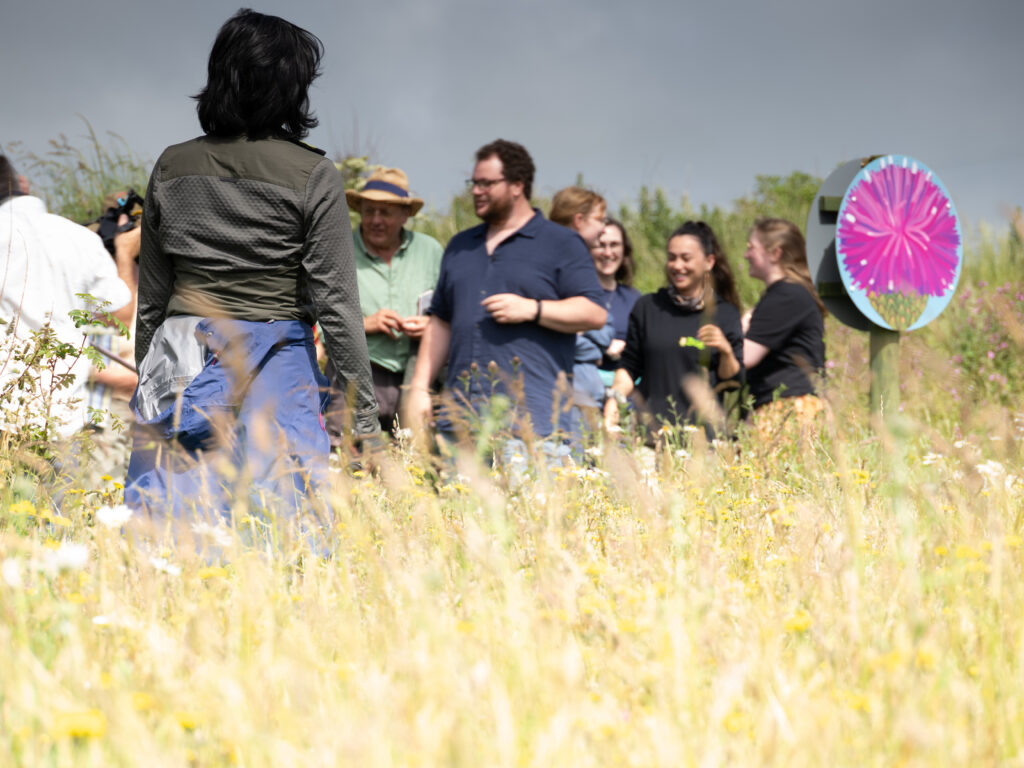
BeeWalk at The Bug Farm. Credit: Andy Holcroft
We can see the impact of that in BeeWalk data as well. No drop-off in peak numbers during the heatwaves themselves, but instead the numbers drop off earlier as colonies decline, wasting away without enough food to go round. Some of the impact visible in those extreme-heat years of 2019 and 2022 is likely to be down to this effect, but we can also see it more widely. Summer 2023 actually had a higher average temperature than the 40°C summer of 2022, and we can see several species including the Garden, White-tail, and Red-tailed bumblebee declining more quickly than normal after their colony peaks. Summer 2025 saw almost all species drop off much more quickly than normal through August and September.
Bumblebees live on an energetic knife-edge. Nests already struggle in degraded flower-poor habitats to bring in enough food – enough energy – to produce the queens that will build next year’s colonies. If heatwaves increasingly produce droughts that see workers struggle for weeks to find enough pollen and nectar in the desiccated landscape. Or if extreme temperatures see them having to sit through weeks – or even days – of a heat-induced mid-day siesta. Then it could be the final straw for some of our most cherished species.