
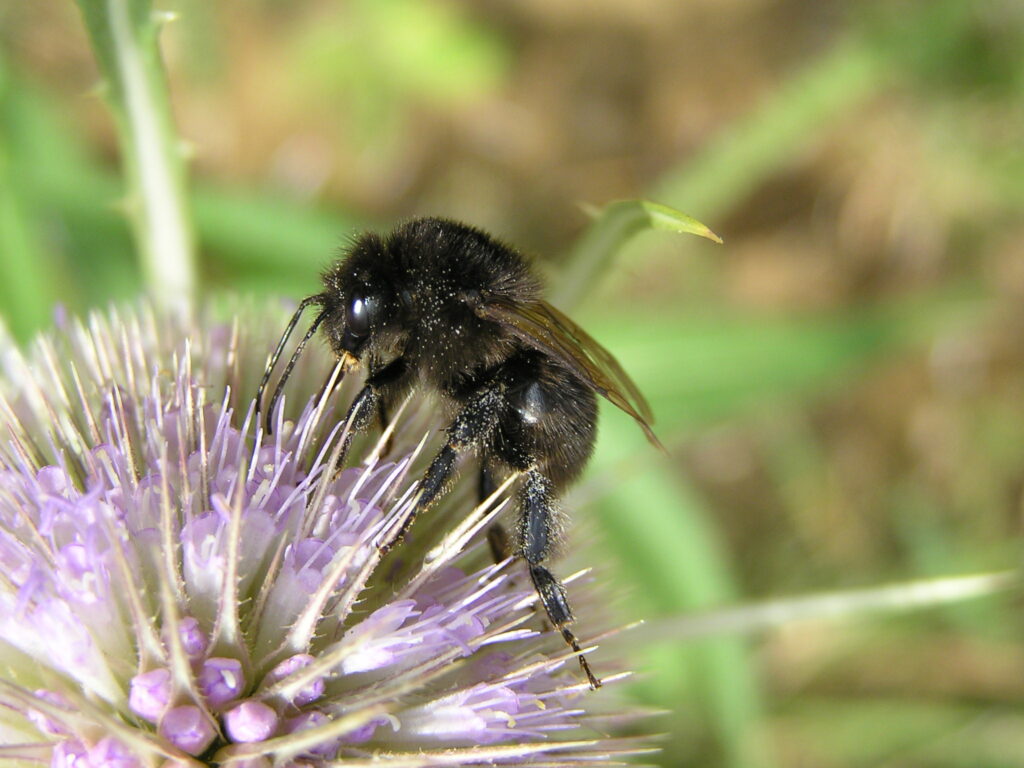
Ruderal bumblebee. Credit: Nick Owens
13 October 2026
In an exciting moment for the capital city, a scarce bumblebee has been recorded at an historic London site this summer by a Bumblebee Conservation Trust volunteer.
The Ruderal bumblebee (Bombus ruderatus) was discovered at Lesnes Abbey Woods, famous for its 12th century abbey ruins and rich ancient woodland in Southeast London. The area is also one of the flagship sites for the Bumblebee Conservation Trust’s Buzzing in the East End (B.E.E) project.
The rare bumblebee was found on catmint, a common garden plant, in the Monk’s garden during a site visit with Bumblebee Conservation Trust volunteer Jason Lok and Project Officer Tilly Hopkins.
The bumblebee has since been verified by experts, making the sighting even more special, as the most recent publicly-available records nearby were in 2018 at Cliffe Pool in Kent, around 27 miles away, and at RSPB Rainham Marshes in Essex in 2021.
Southeast London is home to two of the UK’s rarest bumblebees, the Shrill carder bumblebee (Bombus sylvarum) and Brown-banded carder bumblebee (Bombus humilis). This sighting of the scarce Ruderal bumblebee in the project area shows just how important urban green spaces can be for wildlife.
As part of the project’s close involvement with the site, volunteers have been walking survey routes with Lesnes Abbey Woods site manager, Ian Holt, and building local identification skills through bumblebee ID sessions.
Ian Holt said: “The discovery of the Ruderal bumblebee at Lesnes Abbey Woods is amazing. It helps to illustrate just how important a site like this is for wildlife and the value of working together with organisations such as the Bumblebee Conservation Trust.
“We are proud that Lesnes Abbey Woods was selected as a flagship site for the B.E.E. project and are grateful for the training and expert advice that staff and volunteers have received, which is helping us to better support bumblebees and wildlife in general.”
Buzzing in the East End project began planting at Lesnes Abbey Woods to enhance the wildflower meadows already in place, through increasing flower species and density to specifically help our rarer bumblebees that need foraging opportunities through the bumblebee lifecycle.
Volunteer Jason Lok said: “It was a brilliant surprise to spot the Ruderal bumblebee here. Knowing how much work has gone into training volunteers like myself, and seeing a scarce species appear, makes all the surveying and volunteering feel incredibly worthwhile”.
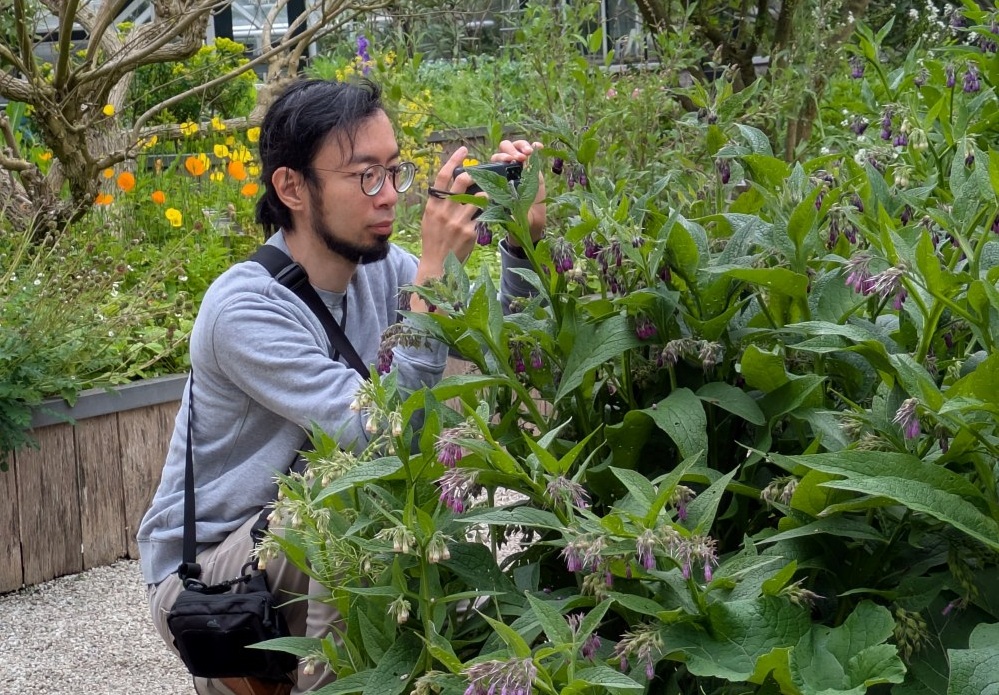
Volunteer Jason Lock identifying bumblebees
Tilly Hopkins, Project Officer at the Bumblebee Conservation Trust, said: “Absolutely delighted the scarce Ruderal bumblebee has been spotted at Lesnes Abbey Woods, and by one of our volunteers. It was exciting to get confirmation from Dr Nikki Gammans after viewing Jason’s video footage. This find really highlights the importance of urban areas for bumblebees, and the focus of the projects work in Southeast London to protect the UK’s bumblebee species.”
The Ruderal bumblebee is quite unique with a variety of colour forms from standard yellow bandings, to an all-black dark form found sporadically across the south of England.
The confirmed record gives the project team a valuable sign that targeted conservation work, regular monitoring and volunteer-led surveying can help reveal the importance of urban and historic sites for rare pollinators.
Work is continuing at the site this autumn, with further planting planned to support rare bumblebees and other pollinators in future seasons.