
Dr Gabriella Süle. 11 February 2026.
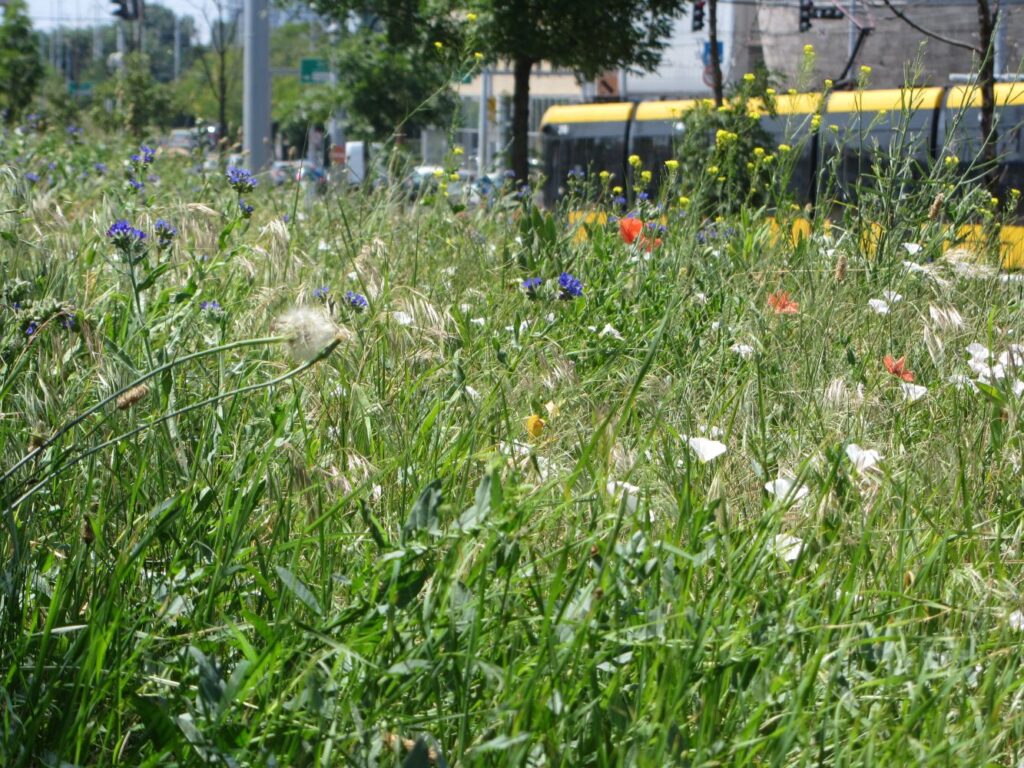
How can we best support pollinators in urban areas? We set out to answer this question by synthesising evidence from research carried out across Europe. We collected and re-analysed 28 datasets covering 1,051 sampling sites across 12 European countries.
Our analysis compared the standard approaches to managing urban spaces with a range of interventions to support pollinators. These took place in parks, road verges, grasslands and gardens and included:
- Flower sowing
- Mowing once or twice per year
- Abandonment (leaving green spaces undisturbed)
- Combined practices
Key findings
All the interventions had significant positive effects on vegetation height, and on abundance and species richness of insect-pollinated plants – increasing the availability of pollen and nectar for pollinators to feed on.
All pollinator groups responded positively to the interventions, but bumblebees and butterflies benefited most.
Flower sowing was the most impactful intervention. This increased the abundance and species richness of insect-pollinated plants, the abundance of bumblebees, and the total number of pollinators.
Among urban habitats, roadside verges were most strongly improved by the interventions, perhaps because they were the least biodiverse places to begin with.
The strongest effects were observed in Northwestern Europe, suggesting regional variation in intervention success.
Knowledge gaps
Only a small proportion of the datasets we analysed provided information on the age of the intervention. Most datasets covered either 1 or 2 years with only two covering 3 years.
Studies assessing the longer term impact of interventions are needed. More studies are also needed on novel interventions – for ground-nesting insects, for example – and on Mediterranean urban habitats, which are currently underrepresented.
What does this mean for bumblebees?
Our findings highlight the value of urban areas for bumblebee conservation: bumblebees benefited most from the interventions studied.
Most interventions aimed to provide flowering plants to supply pollen and nectar – these are important, but have limitations as they don’t meet all the needs of bumblebees and other pollinators. For example, tall and dense vegetation can increase feeding opportunities but decrease nesting sites for species that nest underground, such as the Buff-tailed bumblebee.
Interventions aiming to increase nesting sites are uncommon and therefore under-researched. More research is needed on creating patches of bare soil, which can be used for hibernation as well as nesting. Diversity in habitats is key to meeting the full range of pollinator needs.
Since the most impactful intervention – flower-sowing – is also the most expensive, a next-best option would be to reduce mowing to once or twice a year.
‘Mosaic mowing’ – mowing at different times in different areas and cutting to different heights – can help increase diversity by creating a mosaic of different vegetation types.
The cost of flower sowing can also be reduced by using ‘green hay’ – wildflowers and grasses cut from a nearby healthy, species-rich meadow just before they set seed, which is then spread on the prepared site.
Combining mosaic mowing with overseeding areas with wildflower seeds would be a cost-effective and sustainable approach. Ultimately, evidence-based urban biodiversity strategies, adapted to local requirements, are key to helping urban pollinators.
Gabriella Süle is a research fellow in Lendület Ecosystem Services Research Group, based in the Institute of Ecology and Botany at the HUN-REN Centre for Ecological Research, Vácrátót, Hungary.
She is the lead author of this scientific article on the research.
4 December 2025
Bumblebee Conservation Trust member Emma England shares the story of how she transformed the blank canvas of her new garden into a haven for wildlife.
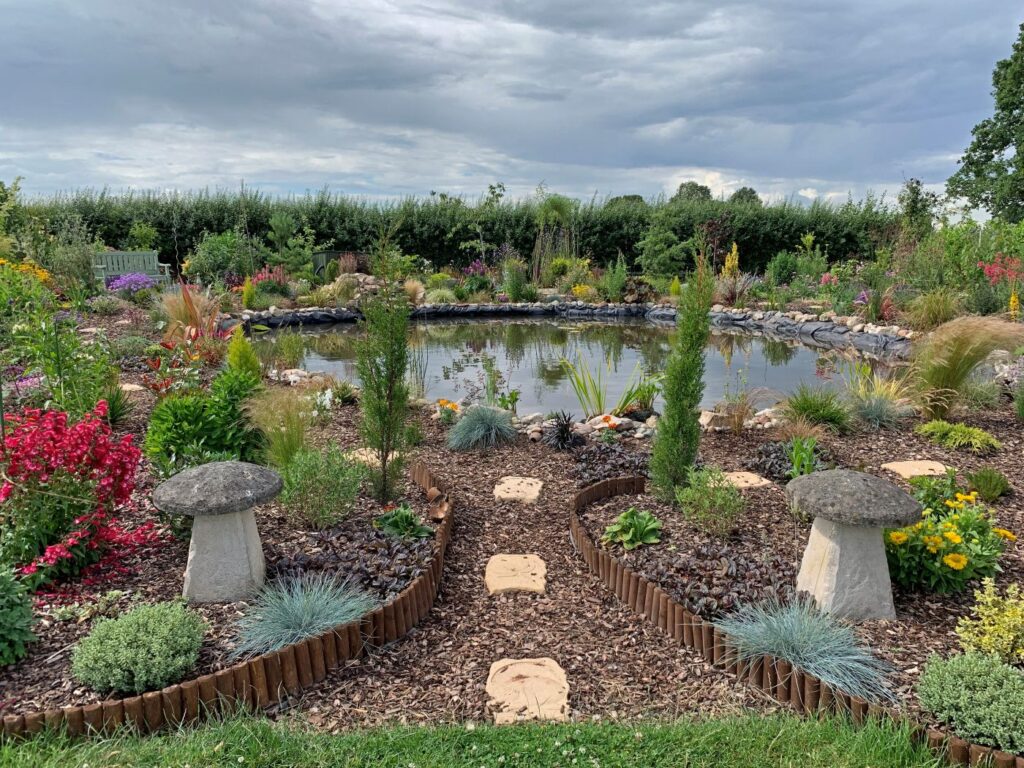
I have always loved spending time in nature and gardening. I volunteered in conservation for many years helping to restore and create habitat for wildlife. I participated in citizen science projects monitoring birds and butterflies while living in Sweden and the US.
When my husband and I returned home to England in 2020, I began looking for conservation projects that I could participate in and found out about the Bumblebee Conservation Trust. I was inspired by their Bee the Change project, so when we bought a house in Cheshire with a large garden I wanted to make a difference for bumblebees.
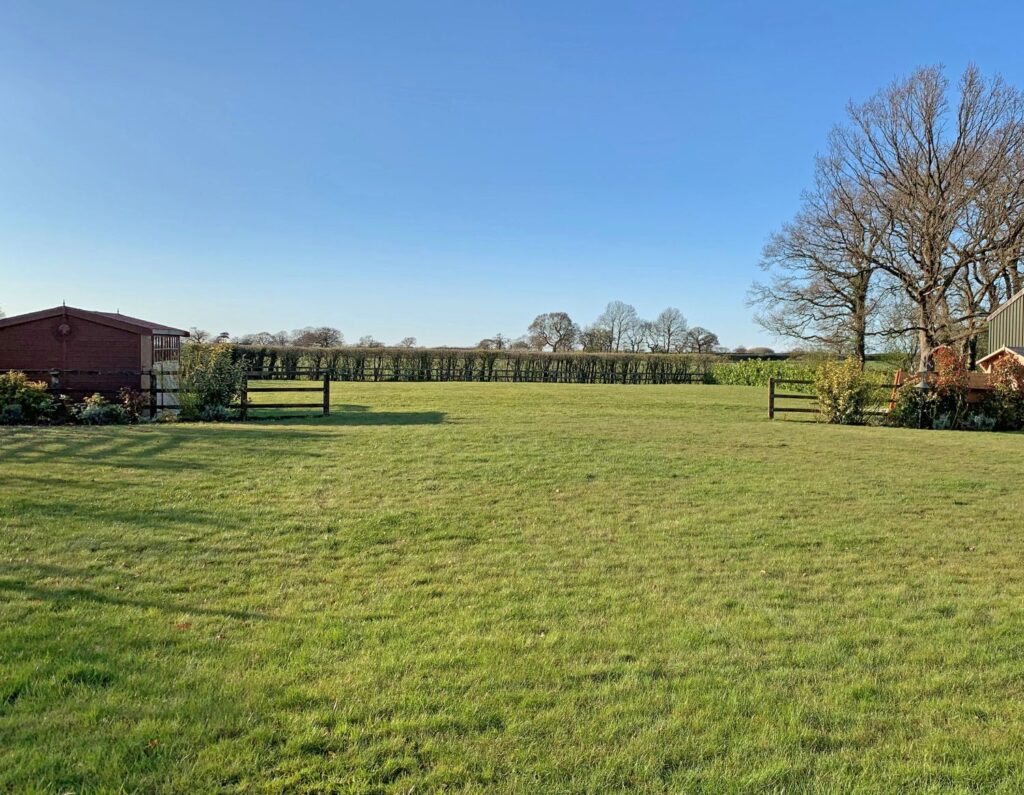
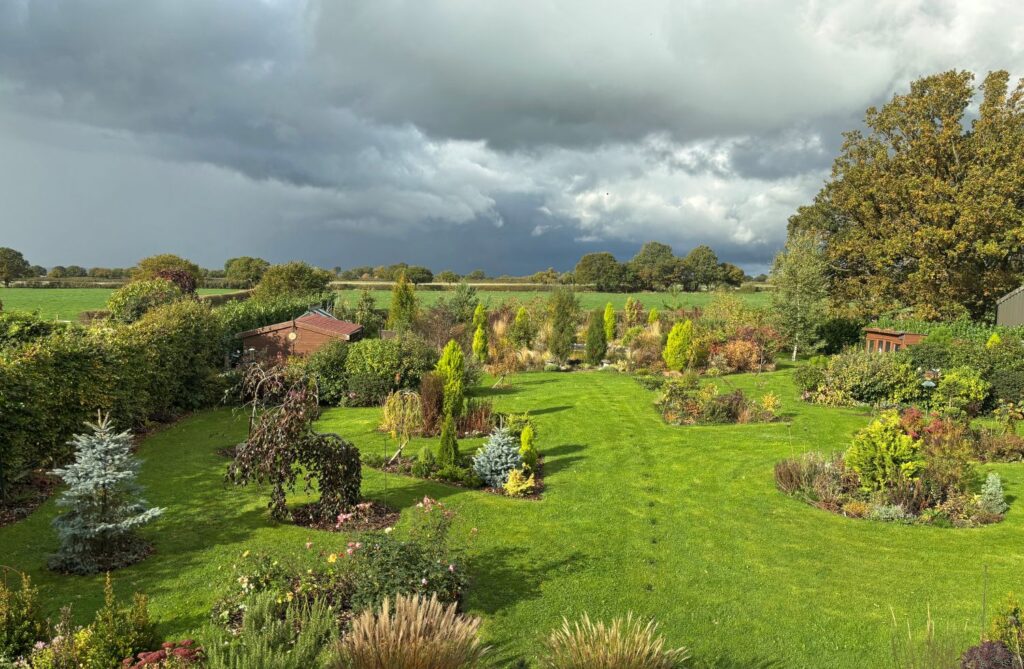
The half-acre garden was little more than a field with a couple of small borders and no bee-friendly plants. Having seen the difference that habitat creation could make to nature, I set about designing a garden to attract as much wildlife as possible.
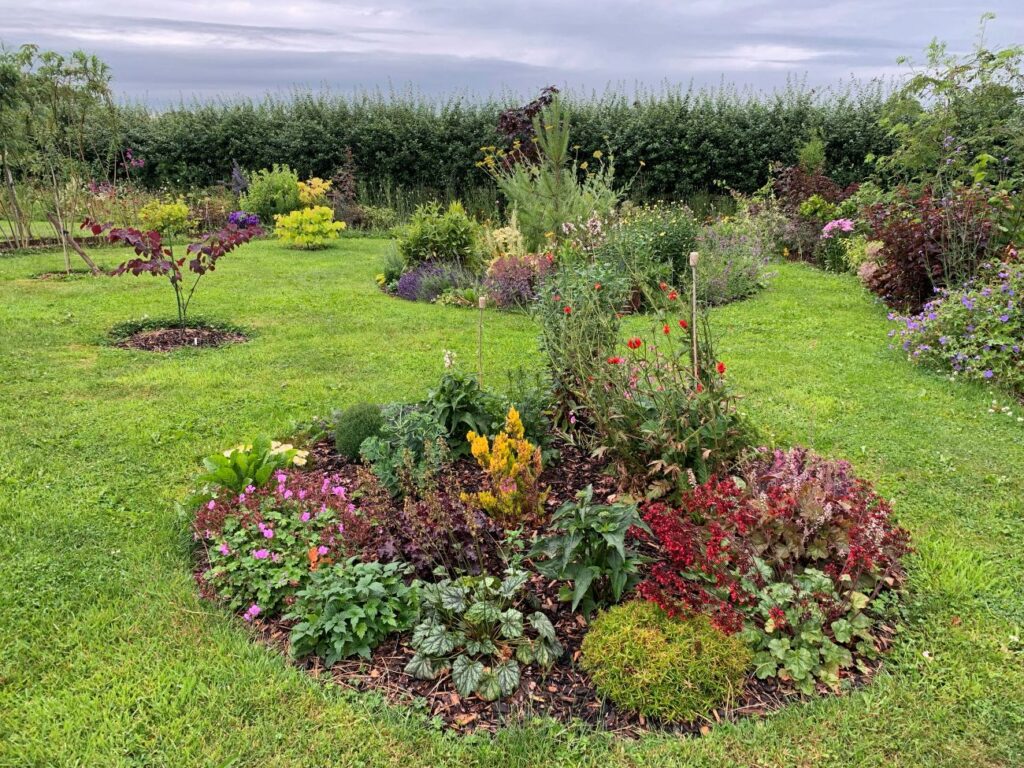
Water is important for all wildlife, so the first thing that I designed was a large pond surrounded by planting. The design also incorporated flower beds in the lawn filled with bee-friendly plants, trees including an orchard area, a willow arch, raised beds for growing veg, and a wildflower meadow. Not finding any landscaping companies that could carry out my vision, I began to create the garden myself.
Apart from digging the large hole for the pond, I carried out all the work myself. Over a couple of years, I planted over 3,000 perennials, shrubs and trees. My husband built bird boxes, hedgehog houses, and bee and bug hotels, one of which is made from recycled pallets and has a green roof.
It has been so rewarding to watch the garden fill with all kinds of wildlife. We have seen bumblebees, butterflies, moths, many other insects, birds, bats, frogs, toads, newts, hedgehogs, voles, and even a hare and a weasel. Creating my happy place filled with so many buzzing bees and nesting birds has been very beneficial to my mental health too.
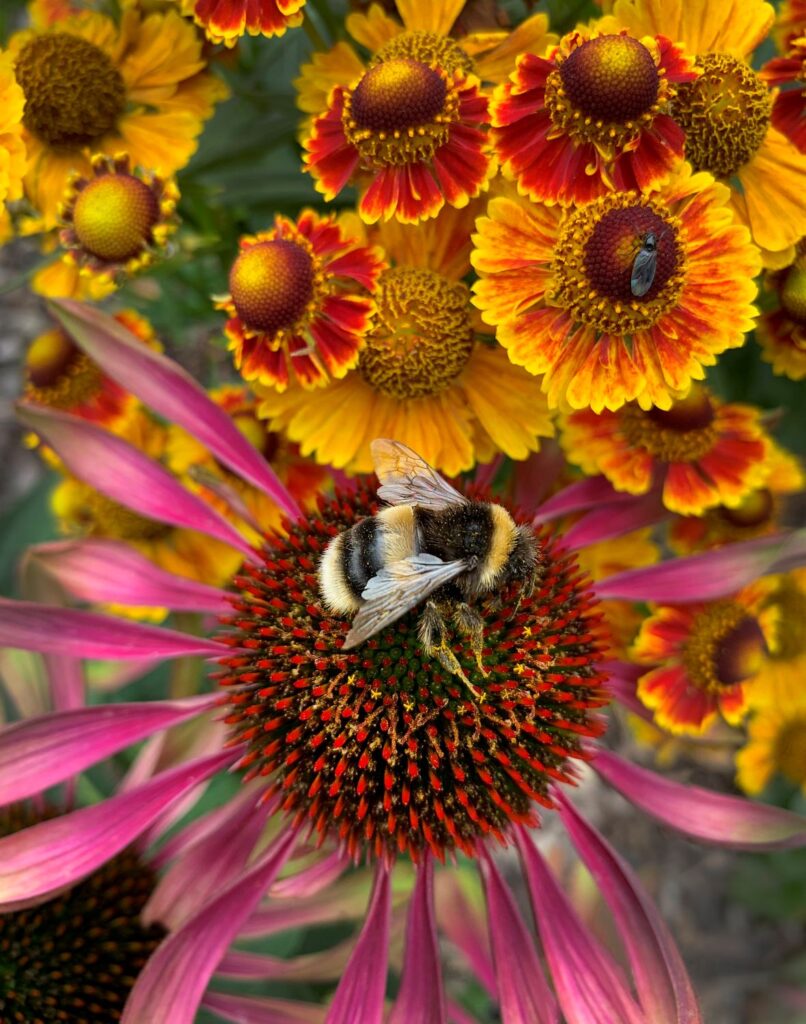
It has been fascinating to learn more about bee behaviour. My favourite bee-friendly perennials are coneflower (Echinacea), sneezeweed (Helenium), lungwort (Pulmonaria), sea holly (Eryngium), purple loosestrife (Lythrum), verbena and bugle. Lamb’s ear (Stachys byzantine) is great too. This year I was fascinated to watch a male Wool Carder bee, which is a solitary bee, guarding one of my Stachys plants and learnt that the female uses the fluffy hairs from this plant to line its nest
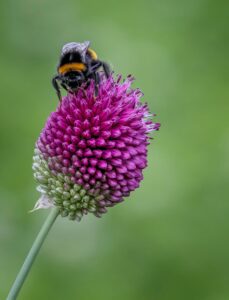
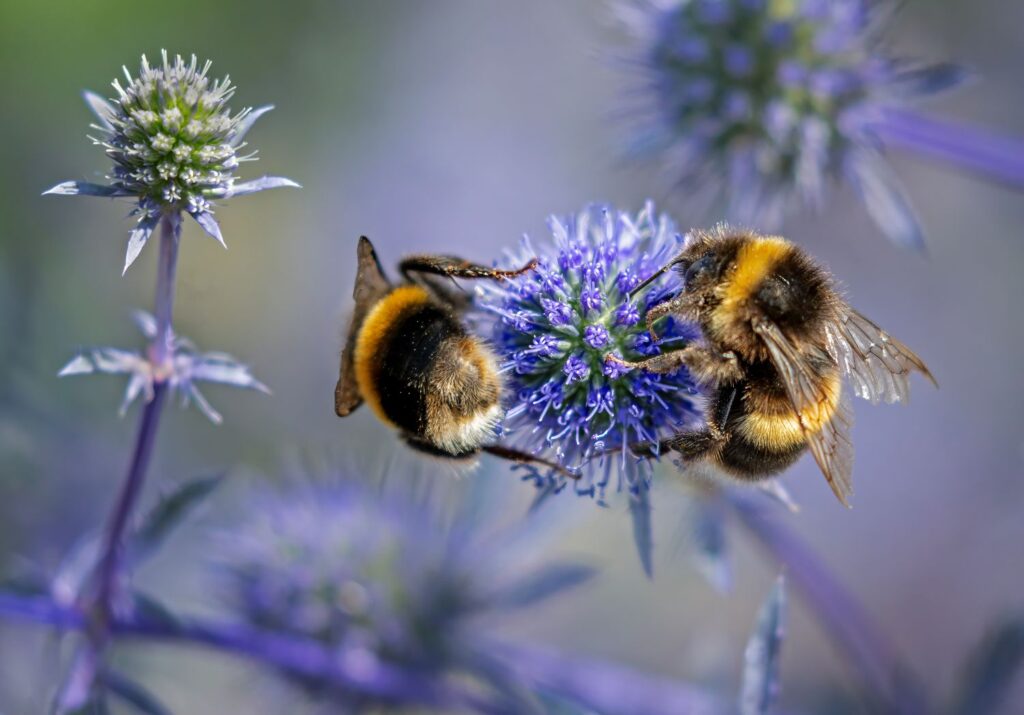
I have also planted hundreds of alliums and love to photograph the bumblebees on them. My favourite shrub is ninebark (Physocarpus) for its stunning colour and flowers. Mahonia is great too as it flowers in winter. I try to have nectar for the bumblebees all year round.
Through creating the garden, I became passionate about plants and decided to study a Royal Horticulture Society diploma course in 2022 with the aim of pursuing a career in horticulture. I have always loved nature, art and photography, so in 2023 I decided to combine all my passions and set up a wildlife garden design business with the aim to inspire people to help wildlife through gardening.
I am enjoying educating people that they can make a difference even by taking small actions in their garden and planting a few bee-friendly plants. Now I am seeing my client’s gardens fill with bumblebees too which makes me so happy.

Winter-active bumblebees: Still flying when it’s freezing
Dr Richard Comont, Science Manager at the Trust, reveals why some bumblebees are still active and how you can help.
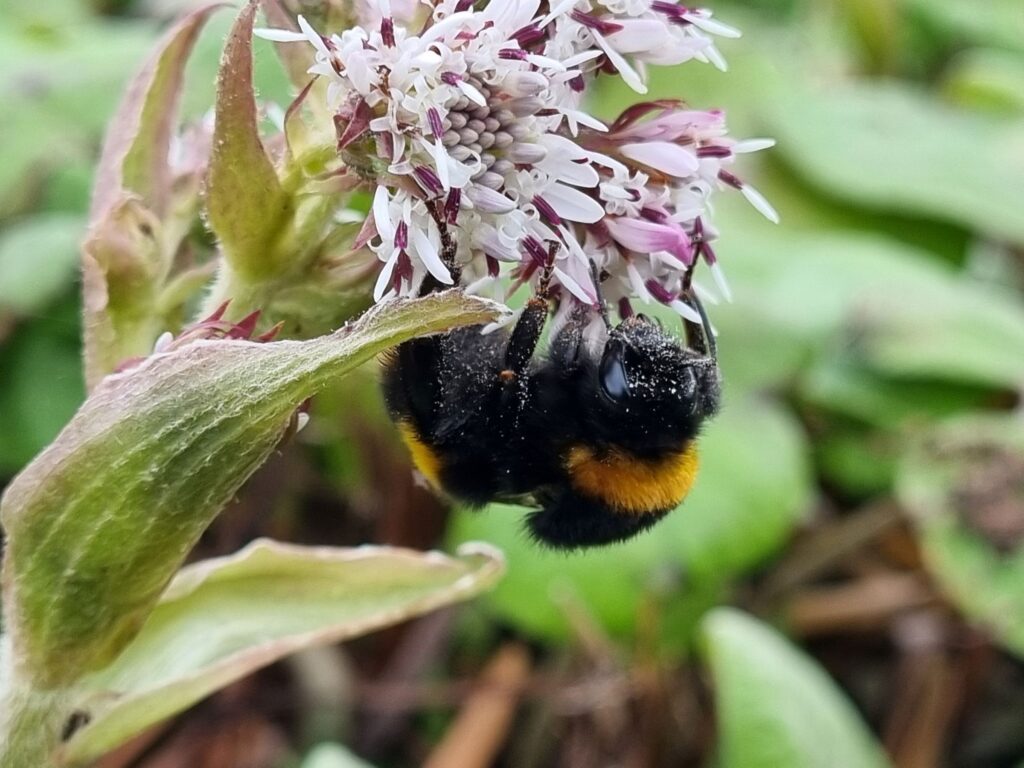
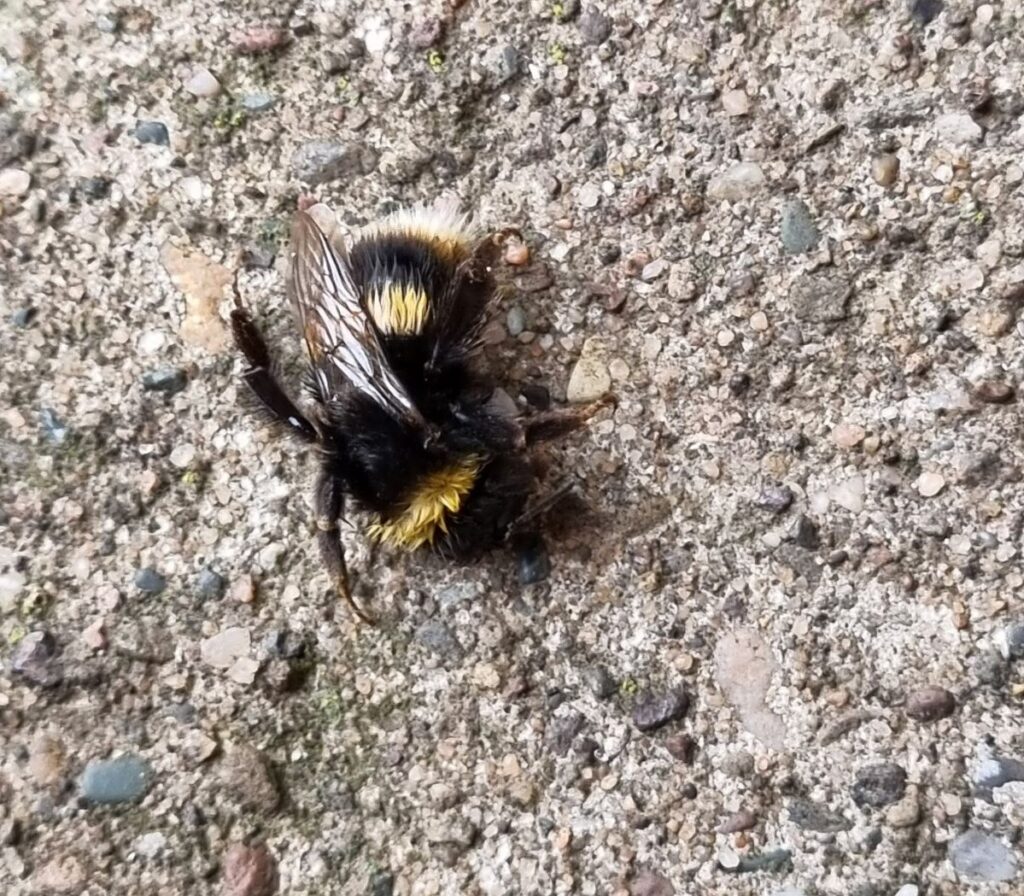
Bumblebees make the quintessential sound of summer. That lazy, droning buzz on the edge of earshot is mentally linked with hot days, sunshine, ice cream… so why was I hearing it now, in a garden centre in mid-November as I searched for inspiration for next year’s allotment? Well, it was a bumblebee, all right, but not just any old bumblebee – this was a winter-active bumblebee, or WAB for short.
In southern Europe, a proportion of bumblebees have always remained active through the winter, building their nests in autumn and producing new queens in spring. But in Britain, such behaviour was unheard of, historically – winters were too cold and flowers too sparse. But then came global warming, and gardening. The first British winter-active bumblebees were seen in the early 1990’s, and they have been a regular fixture ever since, increasing in number and geographic scope. But how have they managed it?
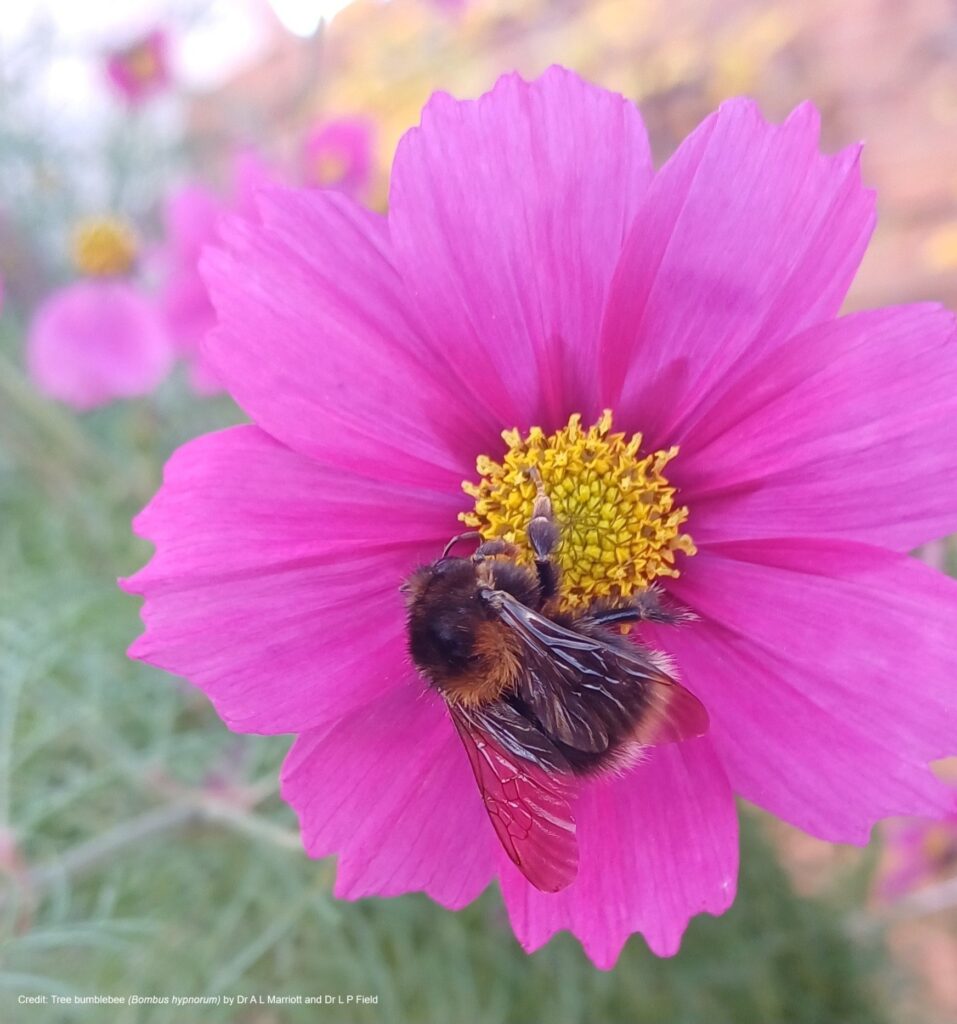
Over the past few decades, winters have become milder, particularly in the south of the UK, and especially so in towns and cities (the ‘urban heat island effect’). This shift has allowed the Buff-tailed bumblebee (Bombus terrestris) to become ‘winter-active’ in the same way as their Mediterranean cousins. In the UK, we define ‘winter-active’ as out of hibernation between November and February inclusive – while a few species stay out late (like the Common carder bumblebee (Bombus pascuorum) queen I saw at the garden centre) and others, such as the Tree bumblebee (Bombus hypnorum), often start the year early, appearing in February, only the Buff-tailed seems to actually have winter-active nests.
Bumblebees are pretty cold-tolerant thanks to their size, furry jackets, and a few other clever tricks, but they still need food. That’s where the gardeners come in. Urban areas, in particular, offer a surprising amount of pollen and nectar through the winter, thanks to increased planting of ornamental shrubs like mahonia, winter-flowering heathers, and witch hazel. These nectar-rich plants provide reliable fuel for winter-flying bumblebees even when natural wildflowers are scarce – although the Botanical Society of Britain & Ireland (BSBI) New Year Plant Hunt suggests that even native species are increasingly found in bloom in the depths of winter. For these cold-weather bumbles, gardens and parks effectively create pockets of habitat where they can survive the colder months.
Being able to do something doesn’t always mean you should, however. Winter-active colonies still face challenges: short daylight hours, sudden frosts, and periods of heavy rain all reduce their foraging time, while snow can blanket low-lying plants or nest entrances. And cold weather increases the amount of energy the bees need to fly, and to keep the nest toasty, which in turn increases their need for nectar. We still don’t have a great idea how well these winter-active colonies are actually doing – to be successful, a nest must at least produce a replacement queen for the next generation. But winter-active colonies produce males and new queens in spring, when it’s virtually impossible to tell if a queen out and about has just emerged from a nest, or from hibernation. Male Buff-tailed bumblebees are very difficult to reliably tell apart from workers, especially if you’re not looking for the differences. We do know that some nests are successful – there’s a steady dip of sightings of mating pairs of Buff-tailed bumblebees early in spring, when at least the males must be from overwintered nests (those from summer nests die off in early autumn).
But they must be doing something right. Sightings keep coming in every winter, from as far north as Inverness, although the south-east and south-west regions have by far the most records. And that’s where you come in. Every winter bumblebee sighting helps us understand how species are responding to climate change, where winter activity is happening, and which plants are most important for supporting them. Even a single observation contributes valuable data.
So if you spot a bumblebee on a winter walk – even on Christmas Day! – please record the sighting on iRecord. Uploading a sighting takes just a couple of minutes, through the website or via an app. A photo is ideal, but not essential. Your records help build a clearer picture of how bumblebees are changing their behaviour in a warming world. And the more we understand, the better we can protect them.
So this winter, keep an eye out. Bumblebees may be tougher – and the bumblebees busier – than you realised.
Bumblebee-friendly seed share
Bumblebee Conservation Trust supporter and keen gardener, Juliet Pearce, shares how she and her friends from Dunnington Green Initiatives Group have encouraged others to sow seeds and grow bumblebee-friendly flowers.

Pass it on for Pollinators with Freebies for Bumblebees
Calling all wildlife-friendly wannabees with pollinator-friendly flowers! Can you Bee the Change in your community by gathering and giving away pollinator-friendly flower seeds?
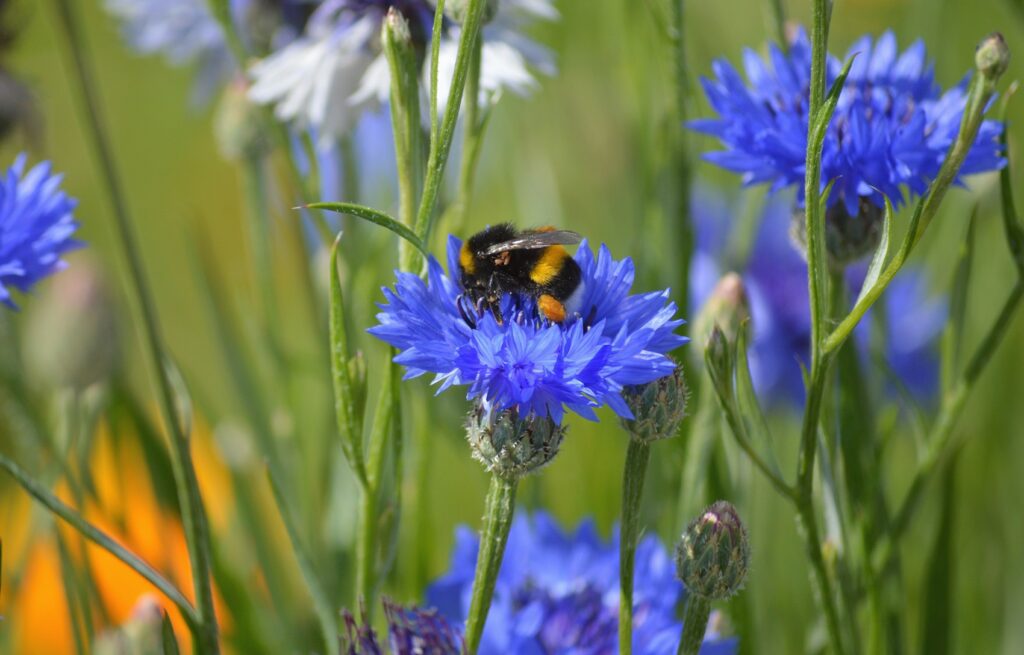
In March, we – a group of volunteers from a community eco group, Dunnington Green Initiatives Group – did just this. With the help of our local church, we offered free seeds, which had been collected from homegrown flowers and packaged up in compostable homemade envelopes, to anyone visiting the local church. We invited everyone to help themselves to these pollinator-friendly wildflower seed packets, which included feverfew, cornflower and corn marigold. Before the end of the month, all 130 seed packets had found homes!
Since this project involved a relatively small input for such a big impact, it seemed a good one to share in the hope that other communities might also be encouraged to grow and share their pollinator-friendly blooms. We think this no cost activity is not only easy to do but also offers relaxing mindful moments as you gather seeds and create your own seed packets from paper. Interested? Here’s how …
Step 1 – Grow pollinator-friendly blooms with easy-to-harvest seedheads (e.g. cornflower, corn marigold, feverfew, nigella, ox-eye daisy).
Step 2 – Late Summer. Gather seeds from those flowers by waiting until they’re dry and then snip off the faded flower heads into a labelled paper bag. Store these somewhere cool and dry for 2 weeks.
Step 3 – Make origami seed packets reusing compostable paper (e.g. parish magazine). The RHS has a guide to follow.
Step 4 – Gently shake out or rub the seeds off the seed heads, then tip the seeds into your origami packets and store in a cool, dry and dark place (ideally in an airtight container).
Step 5 – Early Spring. Arrange an accessible local collection point (e.g. library, church) where you can leave your seeds and let folk drop in to take their pick! Consider creating an accompanying poster with basic advice on sowing and a toxicity warning if needed. Advertise your ‘Freebies for Free Bees’ within your community (e.g. public noticeboard, library, parish magazine, newsagent, GP practice).
Step 6 – Mid summer. Use the same channels to encourage those who collected your seeds to ‘Pass it on for Pollinators’ by sharing their seeds with family and friends.
That’s it! Six simple steps so we can all pull together for our pollinators and help nature thrive!

For more ways to Bee the Change for bumblebees, check out our gardening and our Bee the Change resources.