4 December 2025
Bumblebee Conservation Trust member Emma England shares the story of how she transformed the blank canvas of her new garden into a haven for wildlife.
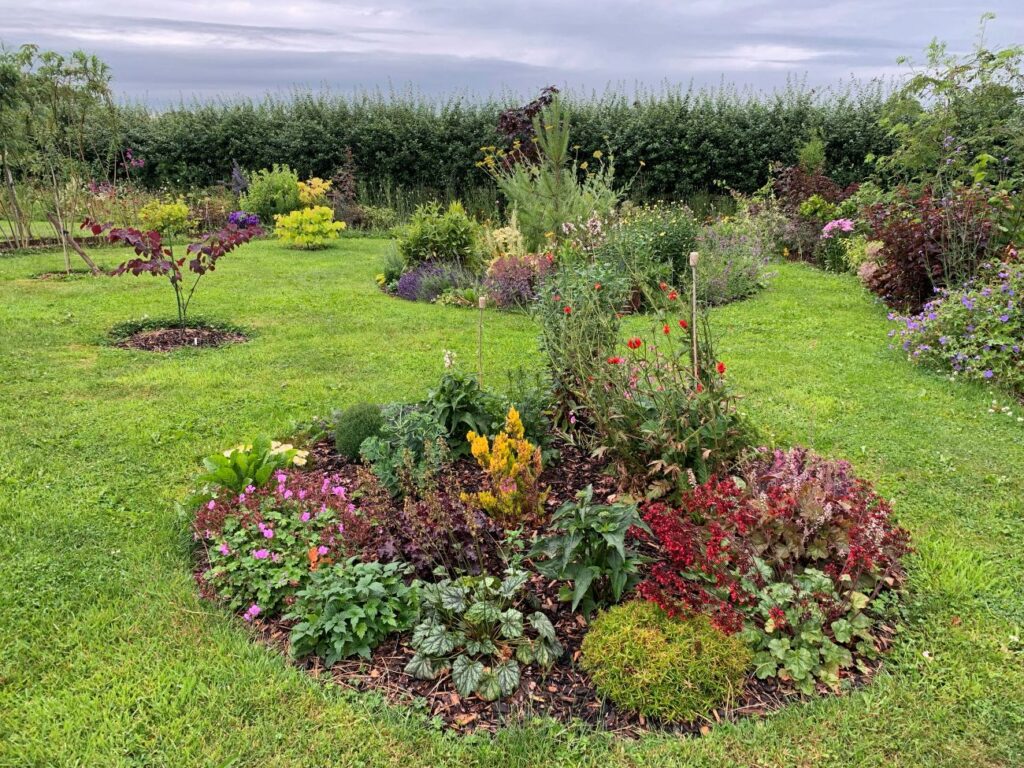
I have always loved spending time in nature and gardening. I volunteered in conservation for many years helping to restore and create habitat for wildlife. I participated in citizen science projects monitoring birds and butterflies while living in Sweden and the US.
When my husband and I returned home to England in 2020, I began looking for conservation projects that I could participate in and found out about the Bumblebee Conservation Trust. I was inspired by their Bee the Change project, so when we bought a house in Cheshire with a large garden I wanted to make a difference for bumblebees.
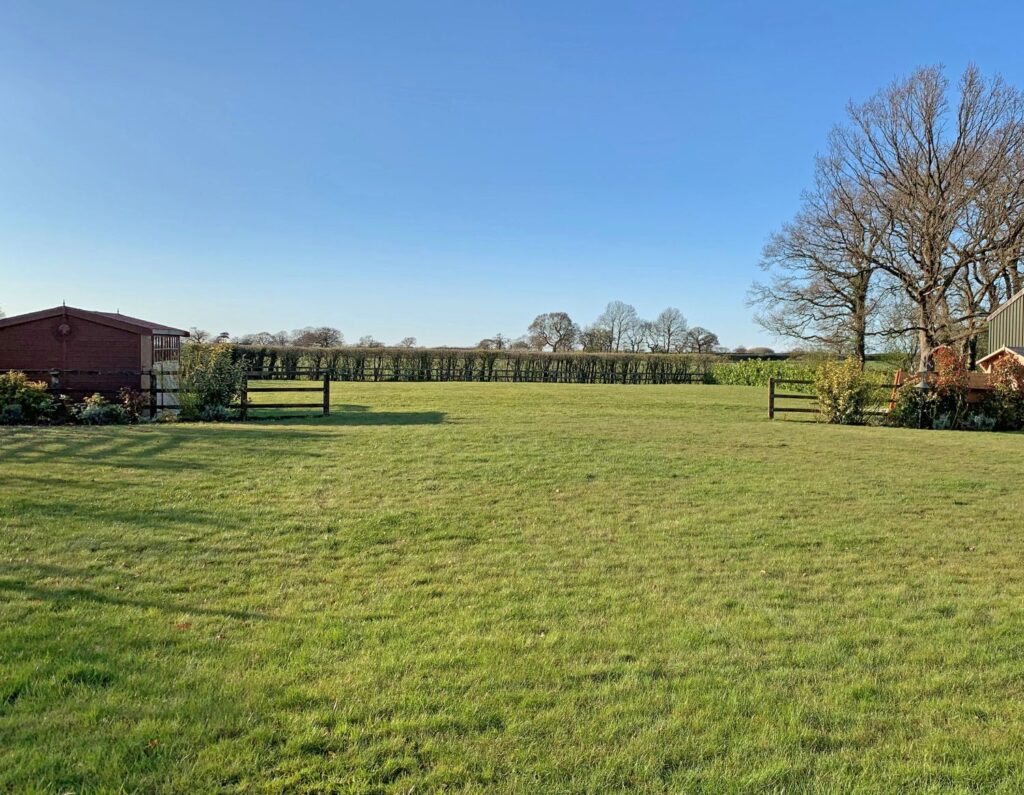
The half-acre garden was little more than a field with a couple of small borders and no bee-friendly plants. Having seen the difference that habitat creation could make to nature, I set about designing a garden to attract as much wildlife as possible.
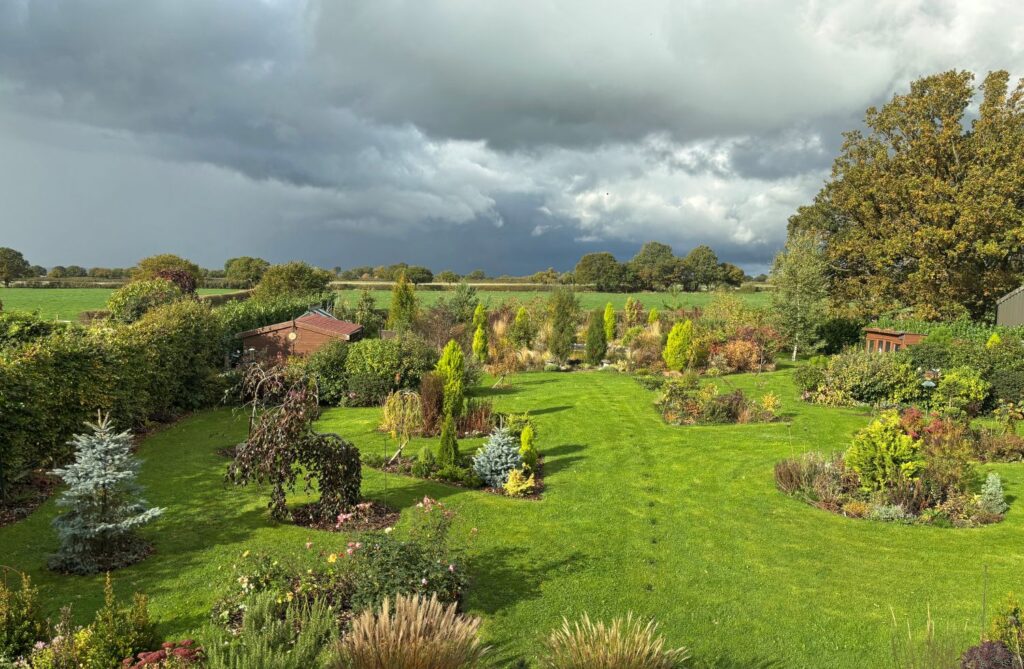
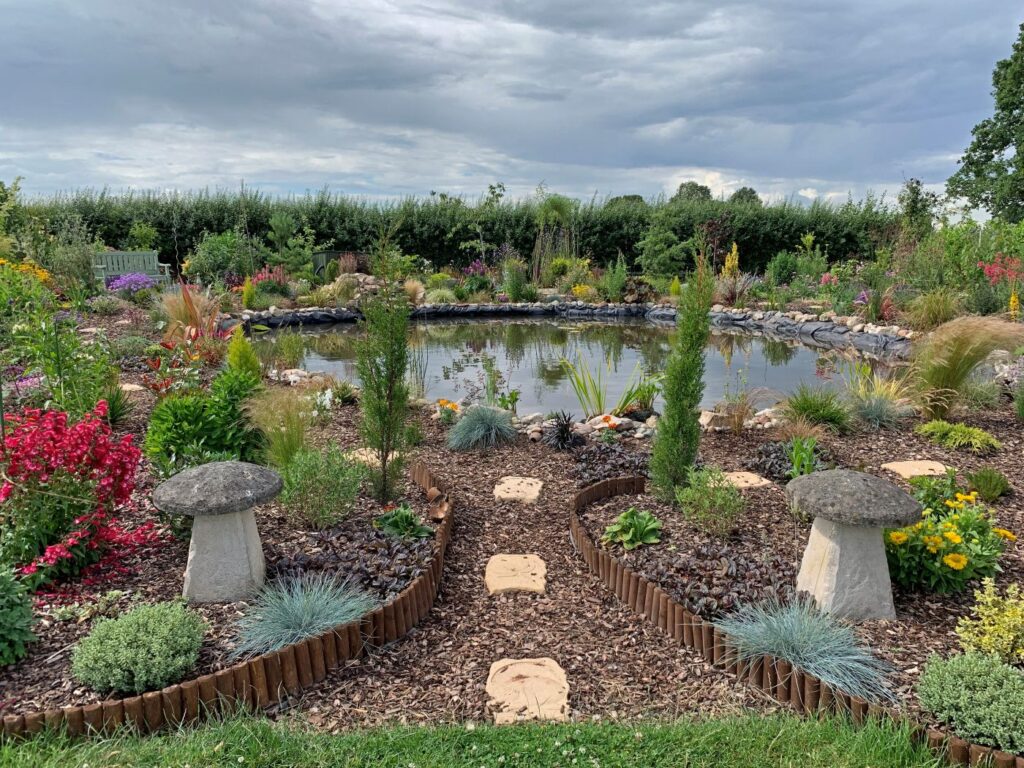
Water is important for all wildlife, so the first thing that I designed was a large pond surrounded by planting. The design also incorporated flower beds in the lawn filled with bee-friendly plants, trees including an orchard area, a willow arch, raised beds for growing veg, and a wildflower meadow. Not finding any landscaping companies that could carry out my vision, I began to create the garden myself.
Apart from digging the large hole for the pond, I carried out all the work myself. Over a couple of years, I planted over 3,000 perennials, shrubs and trees. My husband built bird boxes, hedgehog houses, and bee and bug hotels, one of which is made from recycled pallets and has a green roof.
It has been so rewarding to watch the garden fill with all kinds of wildlife. We have seen bumblebees, butterflies, moths, many other insects, birds, bats, frogs, toads, newts, hedgehogs, voles, and even a hare and a weasel. Creating my happy place filled with so many buzzing bees and nesting birds has been very beneficial to my mental health too.
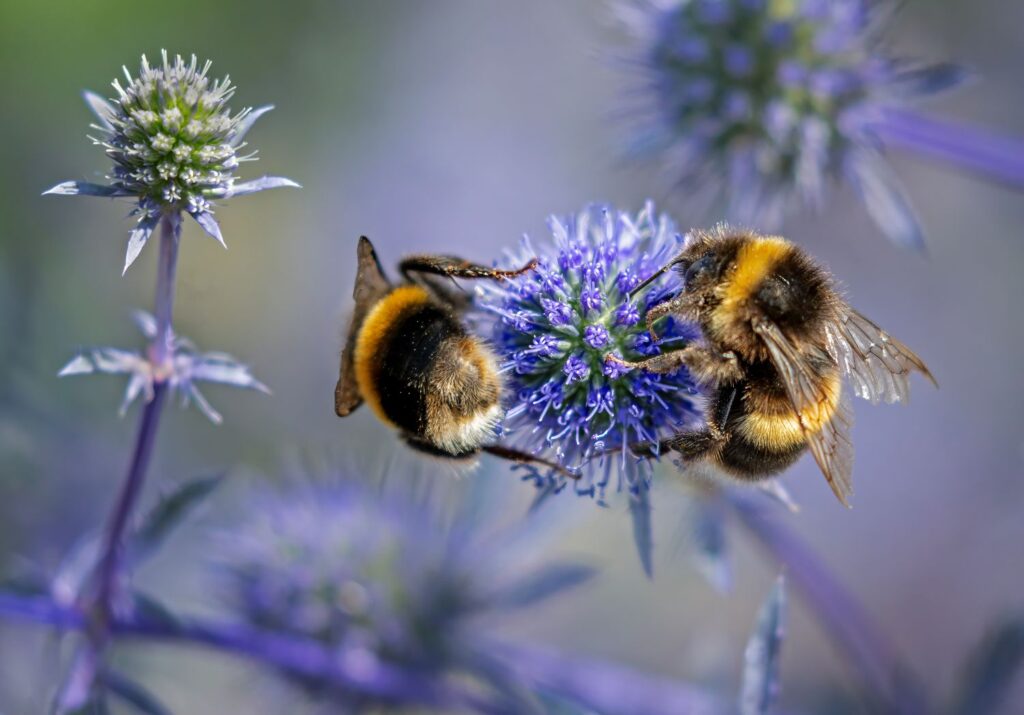
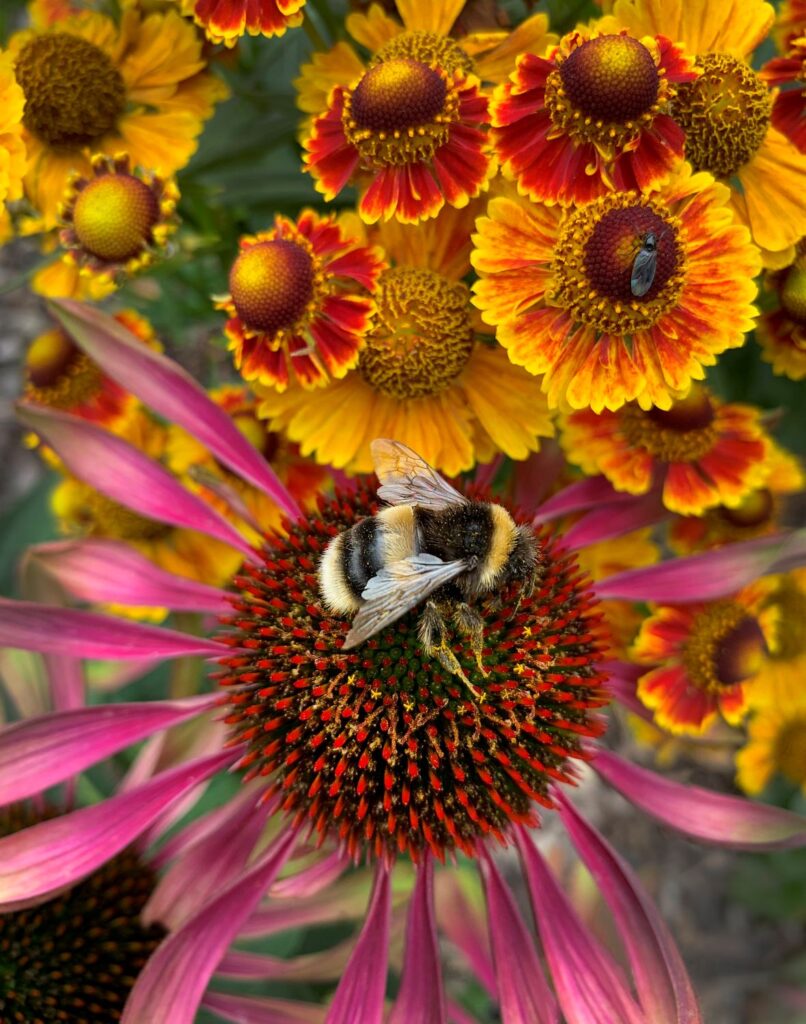
It has been fascinating to learn more about bee behaviour. My favourite bee-friendly perennials are coneflower (Echinacea), sneezeweed (Helenium), lungwort (Pulmonaria), sea holly (Eryngium), purple loosestrife (Lythrum), verbena and bugle. Lamb’s ear (Stachys byzantine) is great too. This year I was fascinated to watch a male Wool Carder bee, which is a solitary bee, guarding one of my Stachys plants and learnt that the female uses the fluffy hairs from this plant to line its nest
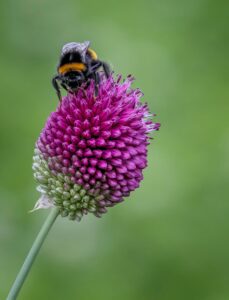
I have also planted hundreds of alliums and love to photograph the bumblebees on them. My favourite shrub is ninebark (Physocarpus) for its stunning colour and flowers. Mahonia is great too as it flowers in winter. I try to have nectar for the bumblebees all year round.
Through creating the garden, I became passionate about plants and decided to study a Royal Horticulture Society diploma course in 2022 with the aim of pursuing a career in horticulture. I have always loved nature, art and photography, so in 2023 I decided to combine all my passions and set up a wildlife garden design business with the aim to inspire people to help wildlife through gardening.
I am enjoying educating people that they can make a difference even by taking small actions in their garden and planting a few bee-friendly plants. Now I am seeing my client’s gardens fill with bumblebees too which makes me so happy.